
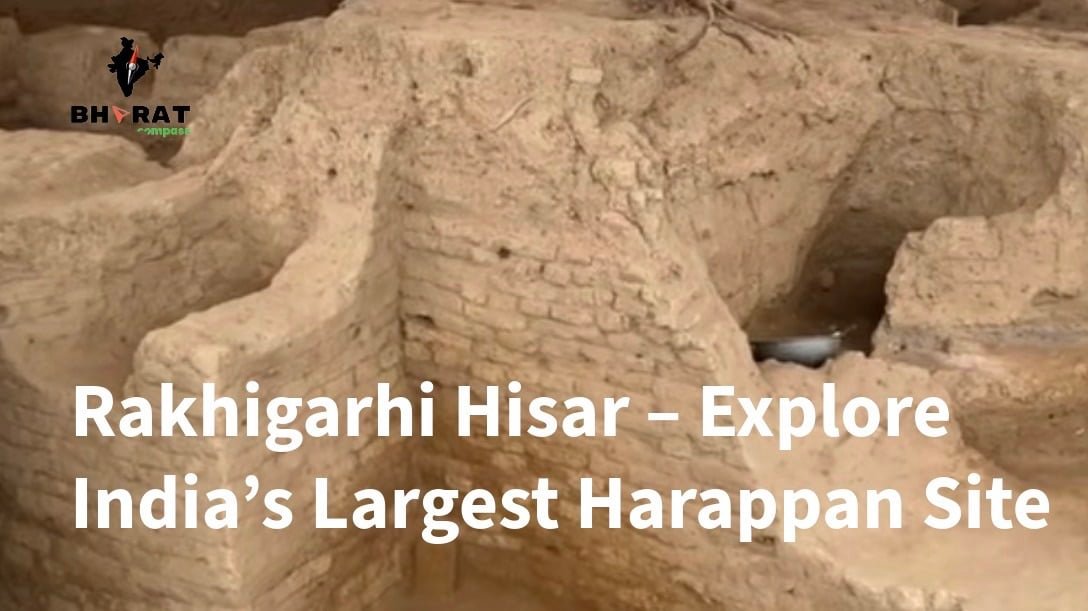
Rakhigarhi, Hisar: Walking Through India’s Largest Indus Valley City
Imagine standing on a quiet mound in a Haryana village. The fields look ordinary. Cattle graze nearby. Then you learn that under your feet lies one of the largest known cities of the Indus Valley (Harappan) Civilisation — a planned Bronze Age urban centre that once stretched across hundreds of hectares and thrived for centuries. That place is Rakhigarhi.
This is not a polished monument with ticket counters and manicured lawns. It is a living archaeological landscape where the modern villages of Rakhi Khas and Rakhi Shahpur sit atop ancient mounds. For history lovers, students, researchers and heritage travellers, Rakhigarhi offers a rare chance to stand inside the geography of an early urban civilisation that flourished long before the better-known names of Harappa and Mohenjo-daro entered popular imagination.
Where is Rakhigarhi?
Where is Rakhigarhi Located?
Rakhigarhi sits in the Ghaggar-Hakra (ancient Saraswati–Drishadvati) river plain in northern India. The archaeological remains are spread across the present-day villages of Rakhi Khas and Rakhi Shahpur.
Rakhigarhi Location
Near the towns of Hansi and Narnaund, roughly 50–60 km from Hisar city and about 150–164 km northwest of Delhi.
Rakhigarhi State / Province
Haryana, India.
Rakhigarhi District / Region
Hisar district (closely linked with the Hansi–Narnaund area).
Rakhigarhi Country
India.
Rakhigarhi Coordinates
Approximately 29°17′35″N 76°6′51″E.
About Rakhigarhi
Why is Rakhigarhi Famous?
Rakhigarhi changed the map of the Indus Valley Civilisation in the Indian subcontinent. For decades the largest and most famous Harappan cities were thought to lie mainly in present-day Pakistan. Systematic surveys and excavations here revealed a vast settlement with multiple mounds, planned streets, drainage, craft workshops, burials and a long cultural sequence spanning Early, Mature and Late Harappan phases. Many scholars now regard it as one of the largest known Harappan sites — commonly estimated around 350 hectares (some assessments go higher when surrounding mounds are included).
Rakhigarhi vs Mohenjo-daro
Rakhigarhi is frequently compared with Mohenjo-daro, one of the most famous cities of the Indus Valley Civilisation. While Mohenjo-daro (in present-day Pakistan) has long been celebrated for its well-preserved urban planning, Great Bath and citadel, Rakhigarhi stands out for its sheer scale. Many archaeologists estimate the archaeological spread of Rakhigarhi at around 350 hectares or more — larger than the commonly cited 300 hectares of Mohenjo-daro. Unlike Mohenjo-daro, which is a more fully excavated and protected tourist site, Rakhigarhi remains a living landscape where modern villages still sit over ancient mounds. Together, the two sites remind us that the Indus Valley Civilisation was not limited to one or two famous cities but formed a vast network of urban centres across the northwestern part of the Indian subcontinent.
Was Rakhigarhi Invented? The Story of Its Discovery
Rakhigarhi was not invented in modern times — it was rediscovered. The site first came to the attention of archaeologists during Archaeological Survey of India surveys in the early 1960s. Systematic excavations began in 1963, followed by major work between 1997 and 2000 under Amarendra Nath. Later seasons led by Vasant Shinde (2012–2016) and ongoing ASI excavations from 2021 onwards have greatly expanded our understanding of the site. These digs confirmed that Rakhigarhi was a major Harappan settlement with a long history of occupation, planned features, craft production and burial practices. Far from being a modern invention, Rakhigarhi is an authentic Bronze Age city that has only gradually revealed its true importance through decades of careful archaeological research.
What is Rakhigarhi Known For?
- Extensive archaeological mounds (traditionally numbered RGR-1 to RGR-7, with additional mounds identified later).
- Evidence of planned habitation, streets, drains and structural remains.
- Craft activity, especially bead-making and ornament production.
- Human burials that have yielded important skeletal and (in some cases) genetic data.
- Pottery, seals, weights, terracotta objects and trade-related finds linking the site to the wider Harappan network.
- Ongoing excavations and the development of a site museum and interpretation centre.
Rakhigarhi at a Glance
| Location | Rakhi Khas & Rakhi Shahpur, Hisar district, Haryana |
| Historical Period | Pre-/Early to Late Harappan (broadly 4th–2nd millennium BCE) |
| Approximate Extent | ~350 hectares (core estimates vary; some assessments higher) |
| Best Time to Visit | October to March |
| Ideal For | History & archaeology enthusiasts, students, educational groups, heritage travellers |
| Key Nearby Towns | Hansi, Narnaund, Hisar, Jind |
How to Reach Rakhigarhi
How to Reach Rakhigarhi by Air
The nearest major airport is Indira Gandhi International Airport, Delhi (approximately 150–170 km). Hisar has a smaller airport with limited connectivity; most visitors still use Delhi and continue by road.
How to Reach Rakhigarhi by Train
Hisar Junction is the most convenient major railway station. From Hisar, hire a cab or local transport for the remaining journey (around 50–60 km / 1–1.5 hours). Hansi is another useful rail-linked point for onward road travel.
How to Reach Rakhigarhi by Road
A private car or hired cab is the most practical option. From Delhi the drive usually takes 3–4 hours (depending on traffic and route via Rohtak, Jind, Hansi or Narnaund). From Hisar the road journey is roughly one hour.
Local Transport in Rakhigarhi
Public transport directly to the archaeological mounds is limited. Arrange a local cab, auto-rickshaw or pre-booked vehicle in advance, especially if travelling in a group or combining the visit with Hansi or Hisar.
Distance to Rakhigarhi
Rakhigarhi Distance from Delhi
Approximately 150–164 km by road (3–4 hours depending on traffic and route).
Rakhigarhi Distance from Nearest Airport
Indira Gandhi International Airport, Delhi – roughly 150–170 km.
Rakhigarhi Distance from Nearest Railway Station
Hisar Junction – approximately 50–60 km (about 1–1.5 hours by road).
Travel Time to Rakhigarhi
Delhi: 3–4 hours by car
Hisar: ~1 hour by car
Hansi / Narnaund: significantly shorter local journeys
Best Time to Visit Rakhigarhi
Rakhigarhi in Summer
April to June can be extremely hot in the Hisar region, with temperatures frequently climbing above 40°C. Open archaeological mounds offer little shade, so afternoon visits are best avoided.
Rakhigarhi in Monsoon
July to September brings greenery but also rain and muddy pathways that can restrict access to the mounds. Carry suitable footwear and check weather conditions before setting out.
Rakhigarhi in Winter
October to March is the most comfortable period. Cooler daytime temperatures make walking around the open landscape pleasant and ideal for photography and longer exploration.
Peak Season in Rakhigarhi
Winter months (especially November to February) see the highest number of heritage and educational visitors. Early mornings remain the best time of day year-round.
Rakhigarhi Weather
Rakhigarhi Weather by Month
The region follows a typical north-Indian continental pattern: hot summers, a monsoon season, and cool, dry winters. Detailed monthly breakdowns are best checked closer to travel dates, as conditions can vary.
Average Temperature in Rakhigarhi
Winters are mild to cool (comfortable for outdoor walking). Summers are hot to very hot. Exact averages should be verified with current forecasts.
Rainfall in Rakhigarhi
Most rainfall occurs during the southwest monsoon (July–September). Pathways can become muddy; plan accordingly.
Snowfall in Rakhigarhi
None. Rakhigarhi lies in the plains and does not experience snowfall.
Places to Visit in Rakhigarhi
Best Places to Visit
The archaeological mounds themselves form the core experience. Understanding their layout, the phases of occupation and the finds recovered from each area turns an apparently quiet landscape into a powerful historical story.
Popular Tourist Attractions
- The protected archaeological mounds (respect all fencing and restricted zones).
- The developing Site Museum and Interpretation Centre (confirm current access and displays before visiting).
- Any on-site information panels or temporary exhibitions of artefacts.
Hidden / Less-Visited Places
Additional mounds and surrounding landscape features are best explored with prior reading or a knowledgeable guide. Always stay within permitted areas.
Things to Do in Rakhigarhi
Popular Activities
- Walk the accessible portions of the mounds and visualise the ancient city plan.
- Visit the museum / interpretation facilities when open.
- Study pottery, craft evidence and burial contexts through displays and literature.
- Photograph the landscape and surviving structural traces (respect photography rules).
Adventure Activities
Not applicable in the conventional sense. This is a heritage and research landscape rather than an adventure destination.
Family-Friendly Activities
Educational walks, museum visits (when open) and combining the trip with nearby Hansi Fort or Hisar heritage sites work well for families and student groups with proper preparation.
Rakhigarhi Itinerary
1-Day Rakhigarhi Itinerary
- 6:00 AM: Start from Delhi or a nearby Haryana city.
- 9:30 AM: Reach the Rakhigarhi area; short tea/breakfast stop.
- 10:00–11:30 AM: Museum / interpretation centre (if open).
- 11:30 AM–1:00 PM: Explore permitted archaeological areas and mounds.
- 1:00–2:00 PM: Lunch in Hansi, Narnaund or nearby town.
- 2:30–4:00 PM: Optional visit to Hansi Fort or continue toward Hisar.
- 4:00 PM onwards: Begin return journey.
2-Day / Weekend Rakhigarhi Itinerary
Day 1: Focus on Rakhigarhi mounds and museum. Overnight in Hisar or Hansi.
Day 2: Hansi Fort (Asigarh Fort), Firoz Shah Palace Complex in Hisar, and any other nearby heritage stops before returning.
How Many Days Are Enough for Rakhigarhi?
A focused half-day to full-day visit is sufficient for most travellers. Serious students or researchers may want two days when combining nearby Harappan sites and museums.
Rakhigarhi Trip Cost
Budget Trip to Rakhigarhi
Primarily transport costs (shared or public options + local cab). Carry water and snacks. Entry or museum fees, if any, are usually modest. Confirm current charges.
Mid-Range Trip to Rakhigarhi
Private cab from Delhi or Hisar, lunch in a nearby town, and possible overnight stay in Hisar. Comfortable and flexible for groups.
Luxury Trip to Rakhigarhi
Limited on-site luxury options. Higher-end travellers typically stay in Hisar hotels and hire a dedicated vehicle with a knowledgeable driver or guide.
Average Daily Cost
Highly variable depending on origin city, group size and whether overnight stay is included. Transport is usually the largest expense.
Where to Stay in Rakhigarhi
Best Areas to Stay
There is limited tourist accommodation directly at the site. Most visitors stay in Hisar or Hansi and make a day trip.
Budget / Mid-Range / Luxury Hotels
Hisar offers the widest range of options. Check current availability and reviews closer to travel dates. Basic facilities may exist near the site as development progresses (rest house, hostel and cafeteria elements have been inaugurated in phases).
Food in Rakhigarhi
Famous Food / Local Dishes
Expect simple Haryana fare in nearby towns — rotis, seasonal vegetables, dairy items and local sweets. Carry drinking water. Dedicated tourist restaurants at the site itself remain limited.
Best Areas for Food
Hansi, Narnaund and Hisar provide more reliable dining options than the immediate village area.
Shopping in Rakhigarhi
What to Buy / Local Souvenirs
No major specialised markets exist on-site. Any future interpretation-centre or museum shop may offer books, replicas or educational material. Do not collect or purchase any archaeological material from the site.
Places to Visit Near Rakhigarhi
Hansi Fort (Asigarh Fort)
A medieval fort offering a clear chronological contrast to the much older Harappan landscape of Rakhigarhi. Easily combined on the same day.
Firoz Shah Palace Complex, Hisar
Associated with the Tughlaq period and suitable for travellers wanting a second layer of Haryana’s heritage.
Other Harappan Sites
Banawali, Bhirrana, Kunal and Mitathal lie in the broader region. These are primarily archaeological locations and best suited for serious heritage travellers or researchers.
Rakhigarhi Travel Tips
What to Pack
- Comfortable walking shoes, hat/cap, sunglasses and sunscreen.
- Drinking water and light snacks.
- Light jacket in winter; cotton clothing in warmer months.
Local Transportation Tips
Pre-arrange a vehicle if possible. Public options for the final leg are limited.
Budget Tips
Travel in a group to share cab costs. Carry cash for smaller local expenses.
Safety Tips
- Stay within permitted and fenced areas only.
- Do not climb unstable mounds or enter active excavation zones.
- Supervise children closely on uneven terrain.
Important Things to Know
- Never touch, remove or collect pottery, bricks, bones or any object from the site.
- Confirm museum timings, entry rules and photography permissions before travelling — facilities continue to develop in phases.
- Archaeological sites reward preparation: read a short overview beforehand so the landscape makes sense.
- Respect local communities living around the protected mounds.
Frequently Asked Questions About Rakhigarhi
Where is Rakhigarhi?
Rakhigarhi is located in the villages of Rakhi Khas and Rakhi Shahpur in Hisar district, Haryana, India, near Hansi and Narnaund, approximately 150 km northwest of Delhi.
Which state is Rakhigarhi in?
Haryana.
How do I reach Rakhigarhi?
Best by road from Delhi (3–4 hours) or Hisar (about 1 hour). Hisar Junction is the nearest major railway station; continue by cab. Delhi airport is the practical air option.
What is Rakhigarhi famous for?
It is one of the largest known Harappan / Indus Valley Civilisation settlements in the Indian subcontinent, with extensive mounds, planned features, craft evidence, burials and a long cultural sequence.
What is the best time to visit Rakhigarhi?
October to March, when temperatures are most comfortable for outdoor exploration.
How many days are enough for Rakhigarhi?
One focused day is enough for most visitors. Two days allow combination with Hansi Fort, Hisar and other nearby heritage sites.
Is Rakhigarhi worth visiting?
Yes — if you are interested in ancient history, archaeology or the deeper story of urbanisation in the Indian subcontinent. It is a landscape of quiet significance rather than a conventional monument destination, and it rewards curiosity and context.
Conclusion
Rakhigarhi is one of the most extraordinary heritage places in Haryana. Here ancient history is not confined to museum glass cases; it exists across the very landscape of the village and its archaeological mounds.
A visit offers a chance to understand the depth of India’s urban past and the importance of Haryana in the story of the Indus Valley Civilisation. Whether you are a traveller, student, researcher, content creator or heritage enthusiast, Rakhigarhi deserves a place on your Haryana travel list — approached with respect, preparation and an open sense of wonder.