
The Complete Story of Patalkot Tamia – Valley, Coordinates and Journey
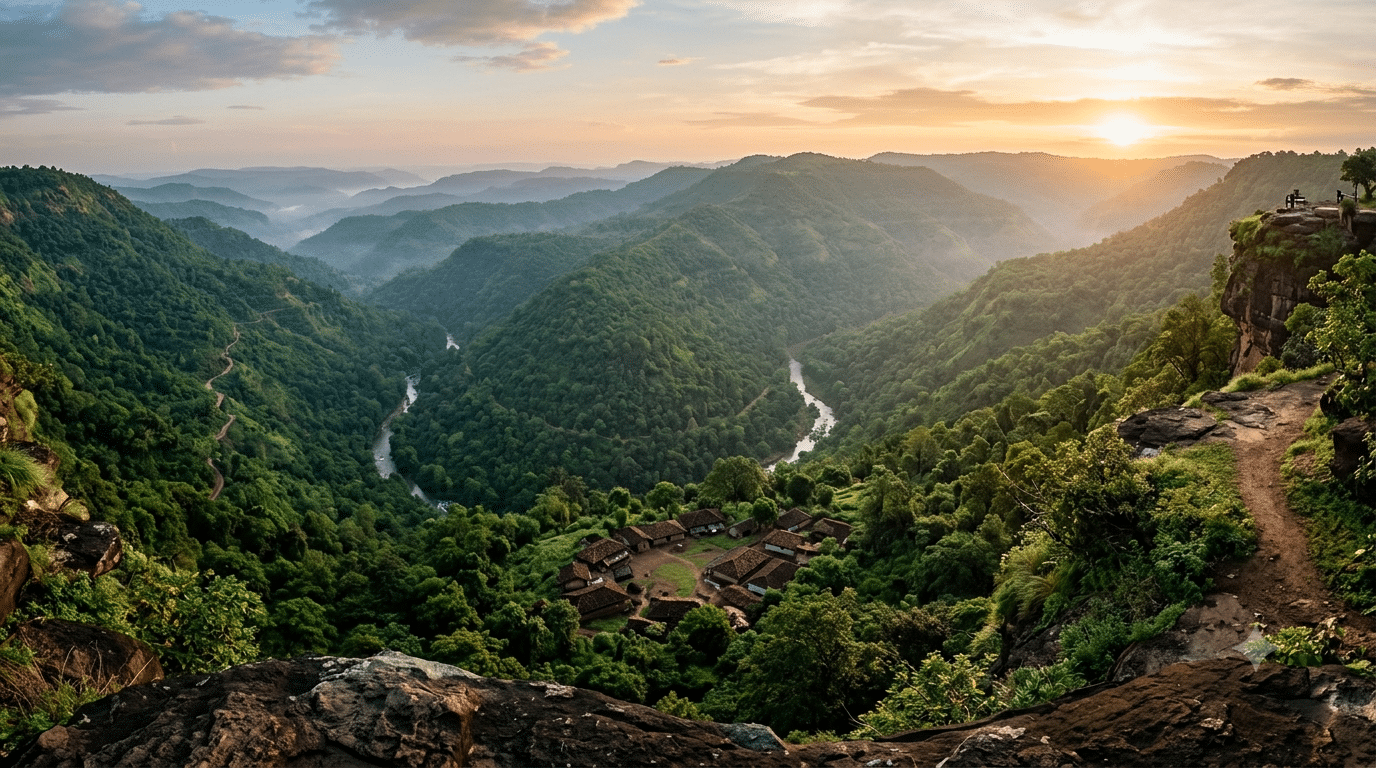
Deep inside the green Satpura hills of Madhya Pradesh lies a quiet and almost hidden place called Patalkot Tamia. This is not a crowded hill station. It is a deep forest valley where the sunlight softens, the air feels cooler, and the land still belongs to the old tribal ways. Patalkot Tamia is home to the Bharia and Gond communities who have lived here for many generations. Their story and the story of the valley are tightly woven together.
Where Exactly is Patalkot Tamia Located
Patalkot Tamia sits in the Tamia tehsil of Chhindwara district in the state of Madhya Pradesh, India. The valley itself is shaped like a horseshoe and drops deep into the earth. When you stand at the edge you look down into thick forest that feels cut off from the busy world outside.
The state is Madhya Pradesh in central India. The district is Chhindwara. The tehsil and block is Tamia. The wider region is the Satpura hills in the central-eastern part of Madhya Pradesh. The country is India.
Patalkot Tamia Coordinates and Exact Position
The approximate central coordinates of the main Patalkot Valley stretch between 22.24° N to 22.29° N and 78.43° E to 78.50° E. A commonly used pin for the Tamia area is 22.9734 N, 78.6569 E. For easy map search most travellers use 22.27 N, 78.47 E for the heart of Patalkot Valley and 22.97 N, 78.66 E for Tamia town. These numbers help you locate Patalkot Tamia clearly on any digital map.
The altitude of the valley floor ranges roughly from 2750 to 3250 feet above sea level. This height keeps the air cooler than the surrounding plains and gives Patalkot Tamia its special feeling of quiet isolation.
Why the Story of Patalkot Tamia Matters
People are drawn to Patalkot Tamia for three main reasons. First, the deep forested valley remains largely isolated and receives limited sunlight in its core zone. Second, it is home to the Bharia community, classified as a Particularly Vulnerable Tribal Group, and the Gond community, both rich in traditional knowledge. Third, the scenic Satpura viewpoints, the quiet charm of the British-era rest house area in Tamia, and the eco-tourism trails create a rare combination of nature and culture.
What Patalkot Tamia is best known for includes the main Patalkot Valley View Point that looks straight into the deep bowl, the Tamia View Point and Chhindipani View Point that open wide forest panoramas, the tribal villages that still show Bharia life, herbal knowledge and crafts, and the forest treks, waterfalls and seasonal streams that become especially lush in the monsoon months.
In short, Patalkot Tamia is an eco-tourism, tribal tourism and viewpoint circuit. It suits nature lovers, light trekkers, culture seekers and travellers who prefer places that still feel offbeat. The ideal season is October to February for pleasant clear weather. July to September brings deep green beauty but some trails can become tricky.
How to Reach Patalkot Tamia – The Full Journey Story
How to Reach Patalkot Tamia by Air
The most convenient airport is Nagpur Airport, roughly 150 to 210 kilometres away and offering the best metro connections. Jabalpur Airport sits about 220 to 230 kilometres away. Bhopal Airport is around 260 kilometres distant. From any of these airports you take a taxi or bus first to Chhindwara town and then continue to Tamia and finally into the valley of Patalkot Tamia.
How to Reach Patalkot Tamia by Train
Chhindwara Junction is the most useful railway station, only 60 to 90 kilometres from the valley and an ideal base for taxis. Nagpur Junction is farther at 185 to 208 kilometres; from there you travel by road to Chhindwara, then Tamia and Patalkot Tamia. Other possible stations include Pipariya, Itarsi and Jabalpur, which lie between 95 and 220 kilometres away depending on the route.
How to Reach Patalkot Tamia by Road
From Chhindwara the road to Tamia and then Patalkot covers about 78 to 90 kilometres and takes three to four hours by car along NH547 and local roads. From Nagpur the full road journey to Patalkot Tamia takes five to six hours via Chhindwara. State buses and shared jeeps run on the Chhindwara–Tamia sector. For the final stretch into the Patalkot villages a private taxi or jeep is strongly recommended.
Local Transport Once You Arrive in Patalkot Tamia
Around Tamia town you will find auto-rickshaws, local taxis and some shared vehicles. Inside the Patalkot Valley and its villages the best way is a hired taxi or jeep, preferably with a local guide for any treks. Many of the best viewpoints and attractions require short walks or light treks from the road head.
Distances and Travel Time to Patalkot Tamia
Chhindwara to Patalkot is approximately 78 to 90 kilometres via Tamia. Chhindwara to Tamia itself is about 60 to 62 kilometres. From Nagpur Airport to Patalkot or Tamia the distance ranges from 150 to 210 kilometres. From Chhindwara railway station the same 78 to 90 kilometres applies.
Travel time from Nagpur to Patalkot Tamia is roughly five to six hours by road. From Chhindwara to Patalkot it is three to four hours. From Chhindwara to Tamia alone it takes about one and a half to two hours.
Best Time and Weather in the Story of Patalkot Tamia
In summer from March to June the days are warm but the hills stay cooler; this period is still good for viewpoints and treks if you carry sun protection. In monsoon from July to September the forests turn very green and waterfalls become active, yet some trails and roads can grow slippery. Winter from October to February brings cool crisp air and clear views and is considered the best overall season. The peak period is therefore October to February because of pleasant weather and holiday time.
Month by month the pattern is clear. October to February stays cool to mild and most comfortable. March to June brings warm days and cooler nights. July to September sees moderate to heavy rain and lush forests. The hills are always a few degrees cooler than the plains and winter nights can feel chilly. Rainfall follows the typical central India monsoon pattern with July and August as the wettest months. There is no snowfall because Patalkot Tamia lies in a tropical and subtropical hill region.
Places That Shape the Patalkot Tamia Experience
The best places to visit begin with Tamia View Point, Patalkot Valley View Point and Chhindipani View Point. The Bison Lodge and Tamia forest area also form part of the circuit. Popular attractions include the Patalkot villages of the Bharia and Gond people, the Doodhi River and surrounding forest, the Gond-era site known as Raja Kho, and Zingaria Waterfall.
For those who prefer quieter corners, smaller tribal hamlets inside the valley can be visited with a guide and proper respect. Quiet sunrise and sunset points around Tamia and seasonal waterfalls on side trails reward those willing to walk a little farther.
Things to Do While Living the Patalkot Tamia Story
Popular activities include photography from the valley viewpoints, village walks that help you understand Bharia and Gond traditions, and short nature treks with local guides. Adventure options cover trekking around Patalkot including the path to Zingaria Waterfall, forest walks in the Satpura fringe areas, and seasonal river activities near the Doodhi with proper safety and permissions.
Family-friendly choices are easy viewpoint visits, gentle forest walks and picnic spots near Tamia, plus respectful cultural interaction with tribal artisans. Couples often enjoy sunset or sunrise at quieter viewpoints, peaceful forest walks, nature photography and calm hill stays around Tamia for a quiet retreat.
Sample Itineraries for Patalkot Tamia
A one-day story starts in the morning at Tamia and moves to Tamia View Point and Chhindipani. Midday is spent at the Patalkot Valley View Point with a short walk. Afternoon can include a guided visit to nearby villages. Evening brings a sunset viewpoint around Tamia before the return journey.
A two-day version allows more breathing space. Day one covers the Tamia viewpoints, Bison Lodge or forest area, and the Patalkot Valley with a nearby village trail. Day two can include a trek to Zingaria Waterfall or deeper forest, a visit to Raja Kho and the Doodhi River area, and some quiet time.
A three-day itinerary feels relaxed. Day one explores the full Tamia circuit of viewpoints, forest and market. Day two goes deep into the Patalkot valley with multiple villages and a valley-floor walk with a guide. Day three offers a longer trek, rest, souvenir shopping and departure.
A simple weekend works well too. Arrive Saturday afternoon, enjoy a sunset viewpoint and local walk. Spend all of Sunday inside the valley covering the main viewpoints, villages and a short trek, then depart in the evening.
One day is enough for the main viewpoints and a quick village glimpse. Two days allow viewpoints, one proper trek and cultural time. Three days support relaxed travel, multiple treks and deeper tribal interaction.
Understanding the Cost of a Patalkot Tamia Journey
A budget trip uses bus or shared jeep plus local auto or taxi, basic lodges or guesthouses in Tamia or Chhindwara, and food from local dhabas. The approximate daily cost stays around 800 to 1500 rupees per person excluding long-distance travel.
A mid-range trip uses a private taxi from Chhindwara or Nagpur, decent hotels or resorts in Tamia or Chhindwara, and a mix of local and restaurant meals. Daily cost usually falls between 1500 and 3000 rupees per person.
A luxury version involves a private air-conditioned car with a custom itinerary, premium resorts near Pachmarhi or Chhindwara plus the best available options in Tamia, and curated meals. Daily cost can range from 3000 to 6000 rupees or more per person.
Most travellers find that planning 1200 to 2500 rupees per day, excluding long-distance transport, covers a comfortable experience depending on personal choices.
Where to Stay in the Patalkot Tamia Story
The best areas are Tamia itself for its closeness to viewpoints and quiet hill atmosphere, Chhindwara for wider hotel options and easy day trips, and any available MP Tourism motel on the way toward Sidhouli or Patalkot.
Budget stays include small guesthouses and lodges in Tamia and Chhindwara plus basic MP Tourism rooms. Mid-range choices are better hotels in Chhindwara with air-conditioning and restaurants, along with private resorts or hotels around the Tamia–Pachmarhi corridor. Luxury options are found mainly in premium resorts near Pachmarhi or in the larger cities of Nagpur, Jabalpur and Bhopal before or after the hill circuit.
Families often prefer the calm and safety of Tamia or the greater facilities of medical care, shopping and varied food available in Chhindwara.
Food and Shopping in Patalkot Tamia
Famous food stays simple and local – Madhya Pradesh tribal and rural cuisine of roti, dal, seasonal sabzi and local chutneys, plus honest hill dhaba food around Tamia and the highway. Local dishes worth trying include Bharia or Gond style home food experienced through guided visits, regional staples based on kodo and kutki, local pickles and preparations made from forest produce.
The best areas for food are the Tamia market area, the Chhindwara–Tamia highway dhabas, and Chhindwara city for greater variety and proper restaurants.
For shopping look for tribal handicrafts, bamboo products and local artifacts where available, along with forest-produce items and simple souvenirs from Tamia and Chhindwara. The Tamia local market offers snacks, basic supplies and some souvenirs. Chhindwara city markets provide a wider range. Local souvenirs often include handmade items by Bharia and Gond artisans through organised initiatives, photographs, local art and nature-themed keepsakes.
Nearby Places That Extend the Patalkot Tamia Story
Pachmarhi is the classic Satpura hill station with waterfalls, caves and viewpoints, reachable in about two to three hours from Tamia. Chhindwara city and its surroundings serve as the district headquarters with museums, markets and access to other Satpura trails. Other eco-circuits in the same region include Anhoni with its Badi and Chhoti sections, Chhota Mahadeo, and various other Satpura forest spots that form part of Madhya Pradesh tribal and eco-tourism routes.
Practical Travel Tips for Patalkot Tamia
Pack comfortable walking or trekking shoes, light woolens for October to February, rainwear for July to September, sun protection, a basic first-aid kit and a water bottle. For local transport hire a reliable taxi or jeep from Chhindwara or Tamia when visiting the villages and treks. Confirm return timing because mobile network can be patchy deep inside the valley.
Budget tips include staying in Tamia or Chhindwara rather than inside the valley and using shared transport for the Chhindwara–Tamia sector. Safety advice is clear: always take a local guide for village trails and deeper treks, respect tribal privacy and ask before photographing people or homes, and avoid venturing into forest areas alone especially in monsoon.
Important things to remember are that Patalkot Tamia is ecologically sensitive and culturally unique, so low-impact tourism is essential. Some areas may have restricted access or require permissions; always check with Madhya Pradesh Tourism or local authorities.
The Living Culture of Bharia and Gond in Patalkot Tamia
The twelve villages of the valley are inhabited mainly by Gond and Bharia tribes. The Bharia, classified as a Particularly Vulnerable Tribal Group, have lived in this isolated valley for over five hundred years and consider themselves the younger brothers of the Gonds.
The Bharia are found primarily in the Patalkot Valley of Tamia block in Chhindwara district. They are known for indigenous medicinal knowledge and a forest-based livelihood. They call themselves Bhumia, meaning Lord of the Soil, and the village priest also holds the title Bhumia. Their original language was Dravidian-linked but today most speak a form of Hindi mixed with Bundeli; the older tongue is largely forgotten. Their own stories say they came from the Mahoba or Bandhogarh region before settling in Patalkot Tamia.
The Gond are one of India’s largest tribal groups and are spread across central India including Madhya Pradesh. In the valley they live side by side with the Bharia. The Bharia regard the Gonds as their elder brothers. The Gond are known for festivals such as Bhagoria, traditional archery, farming and rich folk culture.
Traditional houses are typically small rectangular units measuring about 8.5 by 7.5 metres. Walls are made of rammed earth using straw, soil and cow dung, then plastered with a clay and cow-dung mix and finished with lime. Decoration use geru, a brick-coloured clay. The layout includes a main living room called bhitar, an open front veranda called usari, and a small courtyard called angan. Houses are often arranged in two rows along the village street with a courtyard in front. In many courtyards a raised platform called medha stands on four poles and is used to dry mahua, guli and mango kernels.
Agriculture is the primary occupation and most income comes from farming. Crops include maize, jowar, kutki and rice. A traditional paste-like dish called pej is made by cooking grain with plenty of water. Forest produce such as mahua and mango remains important; bread made from mahua and mango seeds is a favourite during monsoon. Additional activities include hunting, fishing and labour work in fields. Many people work as agricultural labourers, sometimes without their own land. The entire lifestyle of home, food, livelihood, culture and health has traditionally depended on wise use of forest resources.
The valley hosts hundreds of medicinal plant species. Bhagats are traditional herbal healers from the Bharia community. Bhumkas are healers who hold deep knowledge of more than sixty medicinal herbs and plants. Jadi-booti, or herbs, is central to Bharia identity; they know both the medicinal and toxic qualities of local flora in detail. They prepare herbal medicines using pulps and extracts from forest plants and this forms a core part of their healthcare system.
Festivals are closely tied to nature and agricultural cycles. The Bidari festival is a sacred celebration of seeds that honours sowing and harvest. Navakhari or Navakhani marks the arrival of the season’s first crop and is a time of collective gratitude. Other important celebrations include Hariyali Amavasya, Chaitra Navratri, ancestor rituals and community bonding ceremonies. Broader Madhya Pradesh tribal festivals also seen in the region include Bhagoria, Karma, Madai, Hareli and Pola, all celebrated with music, dance and gatherings.
Spiritual beliefs show a strong connection with nature, forests and ancestors; rituals reflect respect for land and seasons. Folk traditions include songs, traditional dances and community gatherings during festivals. The diet is based on local forest produce, grains such as kodo and kutki, mahua and seasonal items. The Bharia are also noted for traditional tattoo art and simple handicrafts using bamboo and forest materials. Despite modern pressures, many families still follow a traditional forest-dependent lifestyle.
The social structure places the Bhumia, the village priest and healer, as a key religious and healing figure who holds knowledge of rituals and herbs. Village life revolves around shared courtyards, common rituals and collective farming or festival activities. Community decisions and cultural practices are often guided by elders and traditional leaders.
Modern changes bring increasing outside influence, tourism and development that slowly alter traditional lifestyles. Some Bharia families show better nutritional levels and literacy compared with certain other tribal groups, yet many still face economic constraints. Forest encroachment, changing land use and reduced access to traditional resources pose challenges. Tourism, if not managed carefully, can disturb both ecology and culture; therefore the emphasis remains on respectful, guided and low-impact visits.
Tourists can respect the culture by always visiting villages with a local guide or through recognised eco and tribal tourism initiatives. Ask for permission before entering homes or taking photographs of people. Do not treat villages as photo spots; interact politely and listen more than you speak. Support local artisans by buying genuine handicrafts but avoid aggressive bargaining. Do not encourage begging or give directly to children in ways that disrupt community norms; channel support through proper programmes if you wish to help. Follow all instructions about restricted zones, sacred places and forest areas.
Frequently Asked Questions About Patalkot Tamia
Where is Patalkot Tamia?
Patalkot Tamia lies in the Tamia tehsil of Chhindwara district, Madhya Pradesh, India, within the Satpura hills.
Which state is Patalkot Tamia in?
Patalkot Tamia is in the state of Madhya Pradesh.
How do I reach Patalkot Tamia?
Fly to Nagpur, Jabalpur or Bhopal, then travel by train or road to Chhindwara, followed by taxi or bus to Tamia and finally into the valley of Patalkot Tamia.
What is Patalkot Tamia famous for?
It is famous for its deep forest valley, the living culture of the Bharia and Gond tribes, and the scenic Satpura viewpoints.
What is the best time to visit Patalkot Tamia?
October to February offers comfort and clear views. July to September brings lush greenery but requires caution on the trails.
How many days are enough for Patalkot Tamia?
One to three days work well depending on how much trekking and cultural immersion you plan.
Is Patalkot Tamia worth visiting?
Yes, if you like offbeat nature, tribal culture and quiet hill viewpoints without heavy commercialisation.
The simple truth to carry home is this: Patalkot Tamia rests in Chhindwara district of Madhya Pradesh. The best season runs from October to February. You reach it most easily through Nagpur and Chhindwara. Focus your days on the viewpoints, the tribal villages and light treks. Plan one to three days, always use local guides, and keep your tourism low-impact and respectful of the Bharia and Gond culture so that the quiet story of this valley can continue.
